
CIEH Excellence Awards 2026
Celebrate the outstanding achievements, innovation and dedication of environmental health professionals and teams. Share your story and be recognised on a national stage.
Wednesday, 4 February 2026, By Karin Goodburn MBE, Director General, Chilled Food Association
I've worked in food safety assurance for decades, and Listeria monocytogenes remains uniquely challenging.
Unlike many pathogens it is ubiquitous in the environment, thrives in conditions designed to keep food safe: growing at -2°C, surviving freezing, flourishing even in high salt and vacuum-packed foods where oxygen is absent.
It forms persistent biofilms on surfaces that, unless subjected to frequent rigorous cleaning, shed unpredictably, spreading contamination. Even when controls are in place its presence at undetectable levels can result in illness if food is subjected to temperature abuse or shelf lives are ignored. Invasive listeriosis has a high mortality rate, cases are sporadic, and outbreaks rare.
Symptoms can take up to three months to appear, turning source-tracing despite full traceability systems into a complex investigation based primarily on personal recollections of what foods may have been eaten over that period of time.
Yet none of these technical challenges compare to the human cost when control fails. Behind every outbreak statistic are families and individuals - pregnant women, the elderly, those with otherwise compromised immune systems - who may have lost their lives or face long-term health consequences. These tragedies remind us that our technical controls and monitoring regimes represent far more than regulatory compliance: they protect real people.
Regulatory changes demand practical support
From July 2026, an amendment of Criterion 1.2b of Regulation 2073/2005 will apply to businesses in Northern Ireland and elsewhere applying EU legislation, strengthening 20-year-old requirements for shelf life evidence and clearer frameworks for Competent Authority action. Enforcement officers need practical tools to evaluate shelf life bases consistently and proportionately.
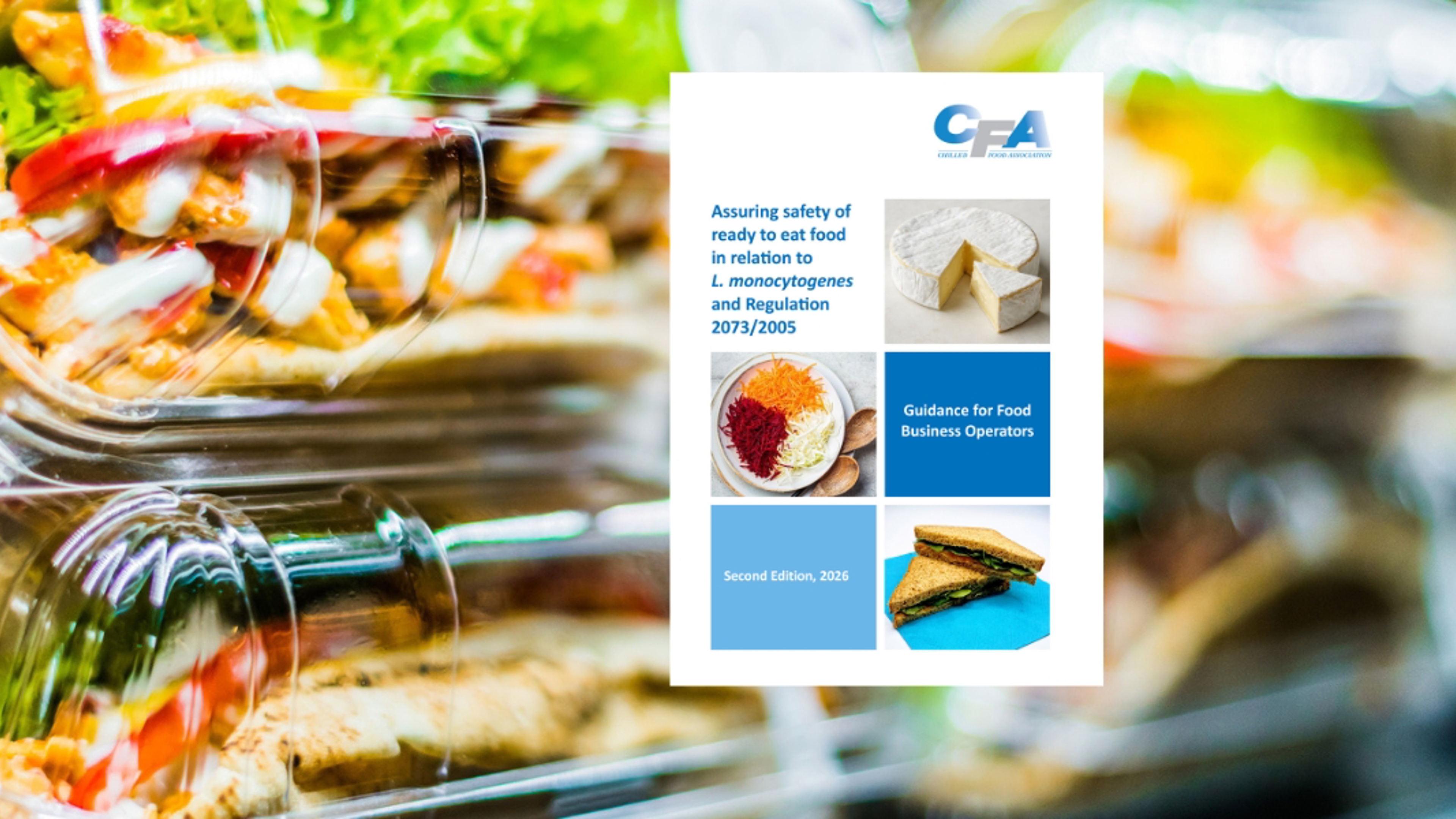
In January 2026, the Chilled Food Association (CFA) published the Second Edition of its Listeria monocytogenes guidance, which focuses on food safety assurance including shelf life as part of HACCP. Developed with food producers, retailers, trade associations and supported by national food regulators (FSA and FSS) crucially, this is not just guidance for industry - it serves equally as a practical reference and training support material for Competent Authorities and enforcement officers.
Why enforcement needs this
The guidance was developed in direct response to practical questions from both food businesses and enforcement teams about how best to interpret and apply microbiological criteria for ready-to-eat (RTE) foods that may support Listeria monocytogenes growth (excluding foods intended for infants or special medical purposes).
The world's largest reported listeriosis outbreak (South Africa, 2017–18: over 1,000 infections and more than 200 deaths) exposed governance gaps in that country and drove systemic reforms there. Closer to home, last year's £10 million UK recall of short-shelf-life products (though in relation to another bacterium) showed how vigilance must never waver. Statistics translate into real human stories - these tragedies remind us that every technical control and monitoring regime represents more than compliance: it protects people and businesses.
The UK has not had outbreaks from retailed food of the scale of that from imported pâté in 1987-1989 - a record grounded in world-leading standards and sustained collaboration - yet the resilience of Listeria monocytogenes means vigilance remains essential by every relevant FBO.
From an enforcement perspective, one of the recurring challenges is ensuring that shelf life justifications, environmental monitoring data and usage of predictive models by FBOs are both scientifically robust and proportionate to risk. CFA's guidance is designed to make those judgements more transparent and consistent.
Key practical tools
CFA’s guidance document is structured around practical tools and worked examples that enforcement professionals can apply directly in the field. Key elements include:
• Decision tree to determine whether and how the guidance applies to a particular product or operation
• Summary tables of microbiological criteria, including amended Criterion 1.2b from July 2026
• Requirements for safe manufacture of RTE foods, providing clear benchmarks for discussions with FBOs about prerequisite programmes and HACCP-based controls
• Checklist for purchasing RTE ingredients, supporting enforcement scrutiny of supplier assurance and upstream risk management
• Environmental monitoring programme design and use, with guidance on what credible surveillance looks like for Listeria in high-risk chilled environments
• Clarified expectations for shelf life, monitoring and compliance data
• Detailed shelf-life establishment approaches, covering physicochemical measurements, scientific and historical data, and experimental studies
• Guidance on use and limitations of predictive modelling, durability and challenge testing, including worked examples to support officers in assessing whether studies are fit for purpose
• Worked shelf-life scenarios (e.g. cheese and sandwich examples) which can be directly mapped to similar products seen in practice
• Examples of historical data that FBOs should collate – and CAs should seek from FBOs -to support ongoing food safety assurance and shelf-life decisions
• Q&A section addressing common operational questions and enforcement scenarios raised by both industry and regulators
For environmental health professionals, this combination of decision tools, case studies and explicit discussion of different shelf life assessment approaches and their limitations is particularly valuable. It helps frame constructive, evidence-based conversations with FBOs about what "good" looks like, without over- or under-interpreting the law.
Supporting consistent, proportionate enforcement
One of the messages from recent FSA engagement with CIEH and Local Authorities has been the pressure on enforcement resources and the need to focus interventions where they make the most difference. In that context, having a shared, industry-led but regulator-endorsed reference point for Listeria management is especially important.
The guidance can support enforcement officers to:
• Assess whether an FBO's shelf-life justification is grounded in sound science and appropriate data
• Challenge weak or over-optimistic claims about Listeria control in a structured way
• Provide clear, practical advice to businesses that are willing but unsure how to comply
• Improve consistency of interpretation between different authorities and across regions
By aligning manufacturers, retailers, trade bodies and enforcement authorities around a common framework, the document also helps reduce unnecessary friction while maintaining a clear focus on public health protection.
Collaborative assurance for public health
The chilled food sector has invested heavily in Listeria control over the past three plus decades, and the UK's record on listeriosis rates reflects that sustained effort - the UK’s listeriosis rates are consistently approximately half those of the EU.
CFA's new guidance captures much of that experience in a form that is deliberately accessible to enforcement officers as well as industry.
For environmental health professionals, it offers:
• A concise way into a complex area of microbiology and regulation
• A practical toolkit for risk-based inspection and enforcement
• A basis for constructive collaboration with food businesses and other regulators
CFA looks forward to continuing to work with CIEH members, FSA, FSS and LAs on the application this guidance as practice continues to evolve. The shared goal is simple: effective, proportionate regulation that keeps ready-to-eat foods safe, particularly for the most vulnerable consumers, which therefore clearly includes supply to healthcare settings for example.
The CFA Guidance (Assuring the Safety of RTE Foods Regarding Listeria monocytogenes and Regulation 2073/2005 (Second Edition, 2026) is available to download at: https://tinyurl.com/CFAlisteria
CIEH Excellence Awards 2026
Celebrate the outstanding achievements, innovation and dedication of environmental health professionals and teams. Share your story and be recognised on a national stage.